Online Schooling aims to overcome the limitations of traditional education and propel ingenuity and creativity into otherwise boring routine-based rote learning methods.
The traditional Indian education system has long struggled with outdated forms of learning and memorisation, which have hindered children from reaching their full potential.
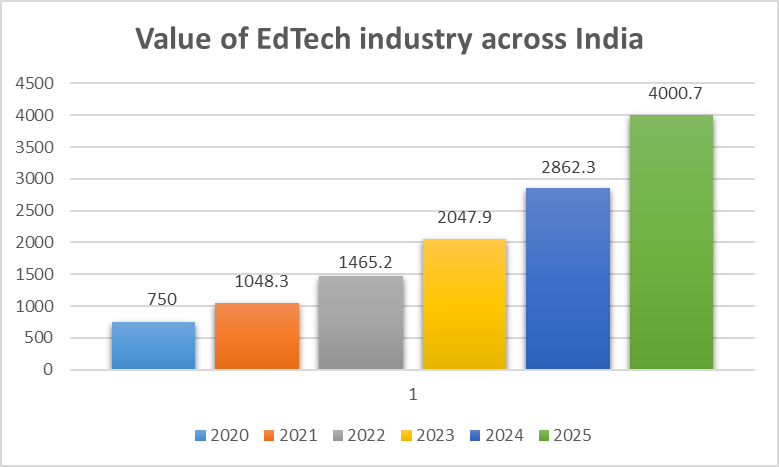
Propelled by the NEP 2020 and a 150% growth in the digital education sector, online schooling aims to bridge the gaps in the current system by
reducing dependence on rote learning and shifting focus to a more fastidious approach to understanding concepts and application-based work scenarios.
Let’s explore this rising phenomenon in detail.
How Online Schooling in India Is Helping Rural Students?
Driven by rigorous digitisation of villages and cities, technical know-how is no longer a challenge. Children living across rural geographies need no longer be deprived of elite education.

Through virtual education platforms, they can focus their energies on developing creative intellect rather than wasting precious time and resources on travel.
Is Online Schooling in India affordable?
In a day and age where education has become highly commercialised and a heavy load on parents, online schooling provides a haven for their children to bloom without having to worry about unnecessary costs like infrastructure, fuel and transportation.
Personalised Learning in Online Schools in India
Virtual schooling provides children with the freedom to choose their area of interest and concentrate on what interests them as an individual, rather than burdening them with a one-size-fits-all approach.

- Online Learning platforms are increasingly using AI-powered tutoring methodologies to fill in the gaps and use real-time systems to analyse and identify areas where a particular student struggles and provide content that is easier for the child to understand, and focus on practical ways to empower them and tackle the issue.
- Real-time assessments and summative assessments provide an intuitive method to check a student’s ability and their scope of understanding concepts, rather than burdening children with year-end exams and vast portions to cover, leading to increased student anxiety and depression in some cases.
- With online schooling, students can now concentrate and move forward on subjects they excel in and pace themselves on more challenging ones.
- Concept-driven learning and live demonstrations make sure that children are equipped to handle real-time scenarios in workplaces rather than having theoretical knowledge about a subject. Children being “skill-ready” is of utmost importance in an ever-changing job market demographic.Online Schooling
How Online Schools Improve Education Quality in India
Online platforms have the potential to bridge the gap between the quality of rural education and urban schools. Many schools are shifting into hybrid model structures wherein they are increasingly making use of smart classrooms and modern age tech resources like AR (Augmented Reality) and VR (Virtual Reality) in digital classrooms.
Several government initiatives like DIKSHA and e-Vidhya provide highly standardized content in various regional languages. These platforms endeavour to help children understand complex problems easily through 3D simulations.
A comprehensive curriculum should adhere to the basic needs of the children, irrespective of their background. It should involve a holistic development model wherein the child is given opportunities to grow mentally and socially.
It should be able to cater to even the unfortunate few with learning disabilities and the socially challenged.
With an online approach, teachers have the freedom to adjust the curriculum according to the student’s needs and hence focus on the child’s strengths rather than his weaknesses. This promotes inclusion, participation among students and piques their interest, propelling them to attend class daily.
Qualified Teachers in Online Schooling Platforms
Quality Teachers are an integral part of any education system. Now, the availability of teachers doesn’t have to be limited to the few metro cities or even the tier 2 or 3 cities.

The same gifted teachers of an online school can look at reaching a wider audience and hence impacting far more students and enriching their lives with their knowledge, and building them up to be better citizens who are socially and morally responsible.
Teachers are free to integrate different styles of teaching and use digital tools to ensure that their teaching methods are effective and wholesome.
They can teach from anywhere and hence focus their attention on things more important than tedious corrections and traditional bookkeeping exercises.
In conclusion, there’s a lot to be desired with this new approach and the benefits of online learning are vastly expanding the possibilities of it being the new norm. With personalized learning, digital classrooms and a student centric education, builds a strong case for why you should explore online schooling options for your child. Online schooling in India is redefining education by offering more flexible options for students everywhere. Students are our future, and in this increasingly competitive world, we need to be able to give them the best chance to succeed.
FAQ
1. What is online schooling in India?
Online schooling in India is a digital education system where students attend virtual classes aligned with NIOS or CBSE boards, complete assignments online and interact with teachers using smart learning platforms instead of traditional classrooms. It ensures children are exposed to innovative ways of learning concepts and discourages memorization and traditional rote learning techniques.
2. Is online schooling in India recognised by education boards?
Many online schools in India are affiliated with recognised boards such as CBSE, NIOS and international boards. Parents should always verify board accreditation before enrolment.
3. How does online schooling benefit students in rural areas?
Online schooling allows children in rural and remote areas access to gifted teachers , smart classrooms and a standardised curriculum which otherwise wouldn’t be available to them.
4. Is online education more affordable than traditional schools?
Yes, online schools significantly lower the costs by reducing expenses such as transportation, infrastructure and uniforms.
5. How are students assessed in online schools?
Online schools follow continuous evaluation methods, such as quizzes, assignments, live projects and online exams to track academic progress throughout the year.